Thursday, April 17, 2014

What makes a good writer?

Want to know what I think of when I think of my writing instruction as a child? This is what comes to mind:

image from Oriental Trading

I have vivid images of a bright, yellow folder that is "multi-flapped" in which I have to sort my writing into the correct stage of the writing process. Obviously, these folders are a lot more high tech than the folders that I used in the 1990s, but the fact that I remember that part of my writing instruction is telling. As a child, I was a part of a school that agreed with researchers that the writing process was an important part of writing instruction. While I had a positive learning experience with writing, that is not true for many students.

Writing to Learn

This concept is categorized by being short, informal pieces of writing. The idea is that writing is the tool in which students use their metacognative skills to understand content. The following video gives a great overview of how this works within the classroom:


Quality writing instruction

Now that the concept of writing to learn is noted, how can you use this notion to give quality writing instruction? Here are a couple of suggestions:


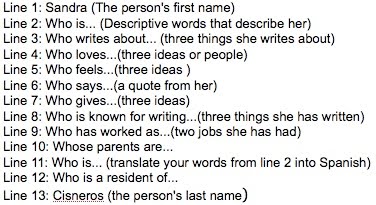
Biopoems

image from mscali.weebly.com

Have you students write a biopoem about a historical figure that they are researching. It allows students to synthesize important ideas and events that involve that figure as well as lets students understand the components of what makes a person complex. This could be used in a History class for students to synthesize what they know about a historical figure.


Dialogues


image from iTeach1to1.blogspot.com


Have students discuss with each other as they are learning about content. You can use websites like www.todaysmeet.com to help facilitate an online discussion. The image shows a discussion students are having through the written language about literature.

Admit/Exit Slips

image from esc13.net

This is a way to get a good gauge on how your students understood instruction. It allows you to pull back students that did not understand certain aspects, and enrich those who already know the content. www.socrative.com offers an admit/exit slip via the internet, but you can just use paper and pencil as the image shows above.

There are so many components to what makes good writing instruction. I have found that good writing instruction includes many other aspects such as academic journals, integration of reading and writing, and learning how to write in different disciplines (Vacca & Vacca). The goal of our instruction as educators is to get students to see themselves as writers and allow themselves to be motivated to be a life long writer.

Thursday, April 3, 2014

Teaching Metacognition

image from keepcalm-o-matic.co.uk
I have a sign up in my 4th and 5th grade literacy room that says this...Talk Less and Listen More. Originally when I bought it, I chuckled a bit thinking of how this poster would be a great reminder for my more talkative of students. However, it hasn't been until my fourth, almost fifth year of teaching, that I realize that the poster that hangs in my classroom, is for me.

What a humbling realization.

Is my role as a teacher to give information about varying topics, or is it for me to teach students how to learn? I am realizing it is more of the latter. Educators always say that the reason that we are in this business is to promote lifelong learning...but do we practice what we preach? Are we teaching our students about a topic or how to discuss a topic? As I was reading articles from Clarke (Discussing Shiloh: A conversation beyond the book) and excerpts from Vacca & Vacca's Content Area Reading: Literacy and Learning Across the Curriculum, I felt shame in the fact that I am not facilitating discussions, but rather running the whole show while not giving my students self-regulation strategies. While I am disappointed in this fact, this only makes me strive to do better.

Metacognition is the act of thinking about thinking. Sounds silly, but that's really what it is! Numerous studies have been conducted on metacognition in education and all conclusions of these studies show that metacognition is a great stepping stone to all types of learning.

Jim Wentworth of the University of Illinois at Urbana-Champaign (my undergrad alma mater...go ILLINI!!) has created a presentation of the research done and commentary on metacognition in college students:


It's amazing to me that even in college, metacognitive skills are hard to wrap your brain around! Therefore, it is imperative that we teach our students to make a plan to achieve a goal, monitor their thinking while enacting that plan, and evaluating if they did or did not succeed in achieving that goal.

I say, the earlier we teach our students metacognitive skills, the better.

If you're so smart, how do we do that at the elementary level, Jen? You may ask. This is what I have for you:

Teaching Metacognitive Skills using the Boston Massacre/Riot

Recently, as you can tell by my earlier posts, my 4th & 5th graders and I have been delving into the American Revolutionary War. We recently explored the Boston Massacre...or Boston Riot. (Depends on what perspective you take...American or British! Oh, reading across multiple texts, how well you lend yourself to this lesson!) After students took notes using a synthesis journal on firsthand and secondhand accounts from Patriot perspectives and British perspectives, I had my students stand on a line on the floor (that I made out of tape) and told my students to stand on one side of the line if they felt that the event truly was a massacre or if the British were just acting out of self defense. I then told my students to talk about what they thought with the people around them using evidence from their notes.

Great first try! 

However, if I could do it over, I would embed more metacognitive strategies within the construct of that lesson, which demands more planning on my part.

The use of discussion stems, discussion protocols and discussion webs could have easily been planned into this lesson. Dr. Manderino & Dr. Wickens from Northern Illinois University talk about cultivating academic conversations in an excerpt that appeared in the Illinois Reading Council Journal in Spring 2014. More information can be found here on that discussion. 

Careful planning of use of these instructional resources could enhance this lesson immensely! Instead of just having students talk to the peers around them (who have similar view points if they're grouped homogeneously according to opinion), it could be beneficial for students to have a discussion with vertical articulation (pairing students of opposite view points together). 

This is just one, small example of adding the component of metacognition into a lesson. It's not something that you have to overhaul your lesson with, but can be seen as more of an additive. Yes, there may be more lessons that occur beforehand and after the fact with explicit instruction on metacognitive strategies, but the pay off is that students will be able to think for themselves, defend their own opinion with evidence, and be able to critique (respectively, of course) others opinions.

Wednesday, April 2, 2014

Building Word Rich Classrooms

**LTRE 511 friends...this is a post I did to make up a class absence...do not post comments to this post for fulfillment of our responses!**

As an educator, I find this to be the most frustrating of topics to learn about and implementing in my own classroom. Not because I do not see the value in it. On the contrary, I find that vocabulary is a super important component of any educational program. In fact, there is a need in our country for vocabulary growth as evidenced by the stunted growth of 4th to 8th graders' vocabulary performance from a NAEP report from  2009 to 2011.

image from NAEP report

There is no convincing of any teacher that vocabulary is important. But how do we, as educators, sift through all of the research out there and determine what exactly is the "correct" way to instruct vocabulary? There are so many schools of thought about how vocabulary should be taught, it's no wonder we're confused! We have the Isabel Becks, the Fisher and Freys, the Hiebert and Lubliners, and the list goes on and on. According to Baumann & Graves's commentary, What is Academic Vocabulary, there are several definitions of what vocabulary is. Let's start with a working definition of the "different" vocabularies that have been thrown around in the education world:

The term academic literacy refers to the language that is used within the broad domain of learning. It could be learning within the classroom or it could be the language used within the "community" of learners. Academic language is language that is specific toward schooling. it is the type of language that is expected for students to engage in during academic encounters. Academic domain knowledge is vocabulary that is used within a specific content area such as math, science, or history.

Academic vocabulary has been defined in two ways, according to Baumann & Graves (2010):

1) Domain-specific academic vocabulary or the content-specific words used in disciplines like biology, geometry, civics, and geography
2) General academic vocabulary, or the broad, all-purpose terms that appear across content areas but that may vary in meaning because of the discipline itself

Phew. Confused yet?

The following image shows a progression of how academic vocabulary is tiered (hence the name, tired vocabulary). For all intensive purposes of this blog, academic vocabulary can be considered synonymous with tired vocabulary.

image from learningunlimitedllc.com

Domain-Specific Academic Vocabulary

When referring to the above image, this would coincide with Tier 3. Famously made famous by Marzano's Academic Vocabulary lists, domain-specific academic vocabulary are words that are very precise to the content that is associated with the vocabulary. This can be referred to as technical vocabulary, content-specific vocabulary, tier 3 vocabulary, technical terms, and so on. These are words that do not generally occur in texts, unless it is specific to a content. For example, the words vegetation and rising action are specific to the contents of science and literature respectively.

General Academic Vocabulary

This term refers to the "Tier 2" part of the image. This is exactly how it sounds, general vocabulary. However, not as general as you think. These can be words like itemize, falter, or misfortune. The words are not specific to a content, but are more specific than words like list, struggle, or bad luck. The occurrence of these words appear more often than domain-specific academic vocabulary, but this is thought to be the "key" to understanding more complex vocabulary. There are varying definitions from different researchers such as Fisher and Frey, Harmon, Wood and Hedrick and Hiebert and Lubliner.

Okay, Jen. So...how do I teach vocabulary?

Graves, Fisher and Frey and Marzano and Pickering suggest different approaches to teaching vocabulary explicitly. The concept that all researchers have in common is the process in which vocabulary for instruction is chosen. This includes comparing words to vocabulary used in class and choosing words that correlate well the to technical vocabulary used in a specific unit.

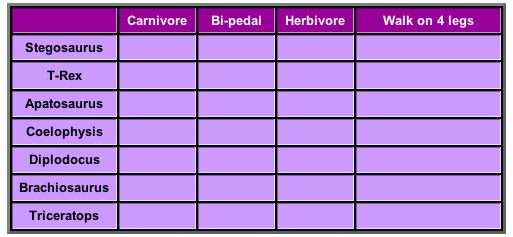
You can use semantic feature analyses in which the reader categorizes vocabulary.

image from fcit.usf.edu


Concept vocabulary maps break down a vocabulary word into illustrations, a broad definition, comparisons, etc.

image from rit.edu

The Frayer model is similiar, but uses a different format.

image from teachingandtapas.com
Dr. Kimbery Tyson has a plethora of suggestions (dos and don'ts) about vocabulary instruction. For more information, visit an article here. Also, there are great articles on a blog called vocabulogic that can be found here.

Regardless, vocabulary is a component of literacy that should be attended to. The way in which we do that "the best way" is yet to be determined. In an article from usatoday.com Francie Alexander of publishing house Scholastic asserts, "results show that developing a rich vocabulary 'can become a huge task for students,' one that schools must take on 'beginning in the earliest grades and continuing through high school'. This reiterates the fact that vocabulary isn't just important in the school setting, but sets up a student for a path to success in life.