As an educator, I find this to be the most frustrating of topics to learn about and implementing in my own classroom. Not because I do not see the value in it. On the contrary, I find that vocabulary is a super important component of any educational program. In fact, there is a need in our country for vocabulary growth as evidenced by the stunted growth of 4th to 8th graders' vocabulary performance from a NAEP report from 2009 to 2011.
 |
| image from NAEP report |
The term academic literacy refers to the language that is used within the broad domain of learning. It could be learning within the classroom or it could be the language used within the "community" of learners. Academic language is language that is specific toward schooling. it is the type of language that is expected for students to engage in during academic encounters. Academic domain knowledge is vocabulary that is used within a specific content area such as math, science, or history.
Academic vocabulary has been defined in two ways, according to Baumann & Graves (2010):
1) Domain-specific academic vocabulary or the content-specific words used in disciplines like biology, geometry, civics, and geography
2) General academic vocabulary, or the broad, all-purpose terms that appear across content areas but that may vary in meaning because of the discipline itself
Phew. Confused yet?
The following image shows a progression of how academic vocabulary is tiered (hence the name, tired vocabulary). For all intensive purposes of this blog, academic vocabulary can be considered synonymous with tired vocabulary.
 |
| image from learningunlimitedllc.com |
Domain-Specific Academic Vocabulary
When referring to the above image, this would coincide with Tier 3. Famously made famous by Marzano's Academic Vocabulary lists, domain-specific academic vocabulary are words that are very precise to the content that is associated with the vocabulary. This can be referred to as technical vocabulary, content-specific vocabulary, tier 3 vocabulary, technical terms, and so on. These are words that do not generally occur in texts, unless it is specific to a content. For example, the words vegetation and rising action are specific to the contents of science and literature respectively.
General Academic Vocabulary
This term refers to the "Tier 2" part of the image. This is exactly how it sounds, general vocabulary. However, not as general as you think. These can be words like itemize, falter, or misfortune. The words are not specific to a content, but are more specific than words like list, struggle, or bad luck. The occurrence of these words appear more often than domain-specific academic vocabulary, but this is thought to be the "key" to understanding more complex vocabulary. There are varying definitions from different researchers such as Fisher and Frey, Harmon, Wood and Hedrick and Hiebert and Lubliner.
Okay, Jen. So...how do I teach vocabulary?
Graves, Fisher and Frey and Marzano and Pickering suggest different approaches to teaching vocabulary explicitly. The concept that all researchers have in common is the process in which vocabulary for instruction is chosen. This includes comparing words to vocabulary used in class and choosing words that correlate well the to technical vocabulary used in a specific unit.
You can use semantic feature analyses in which the reader categorizes vocabulary.
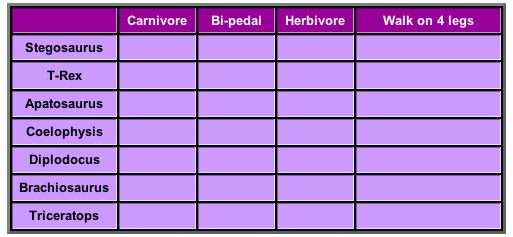 |
| image from fcit.usf.edu |
Concept vocabulary maps break down a vocabulary word into illustrations, a broad definition, comparisons, etc.
 |
| image from rit.edu |
The Frayer model is similiar, but uses a different format.
 |
| image from teachingandtapas.com |
Regardless, vocabulary is a component of literacy that should be attended to. The way in which we do that "the best way" is yet to be determined. In an article from usatoday.com Francie Alexander of publishing house Scholastic asserts, "results show that developing a rich vocabulary 'can become a huge task for students,' one that schools must take on 'beginning in the earliest grades and continuing through high school'. This reiterates the fact that vocabulary isn't just important in the school setting, but sets up a student for a path to success in life.

No comments:
Post a Comment